

Four layers of History
Cockatoo Island sits where the Parramatta River meets the Lane Cove River. It is the largest island in Sydney Harbour.
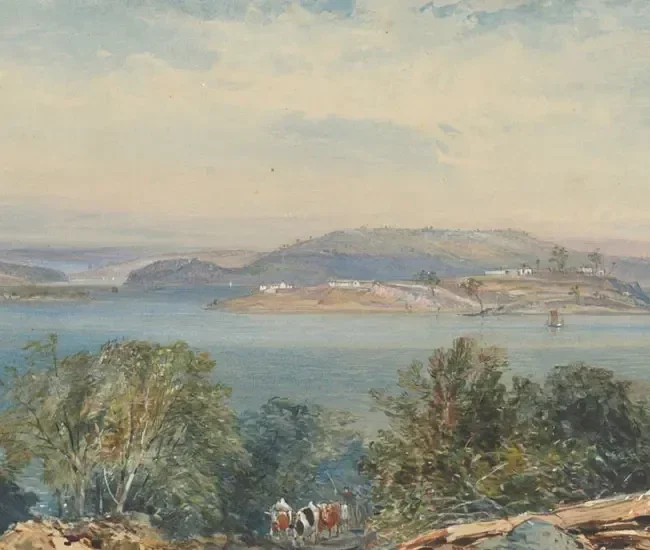
Wareamah
At least 60,000 years, before 1839
For thousands of years Wareamah was a meeting place for Sydney’s First Nations peoples. It remains a place of enduring significance.
Image source: Sydney Harbour Federation Trust. (2026). First Nations history of Wareamah. Cockatoo Island.
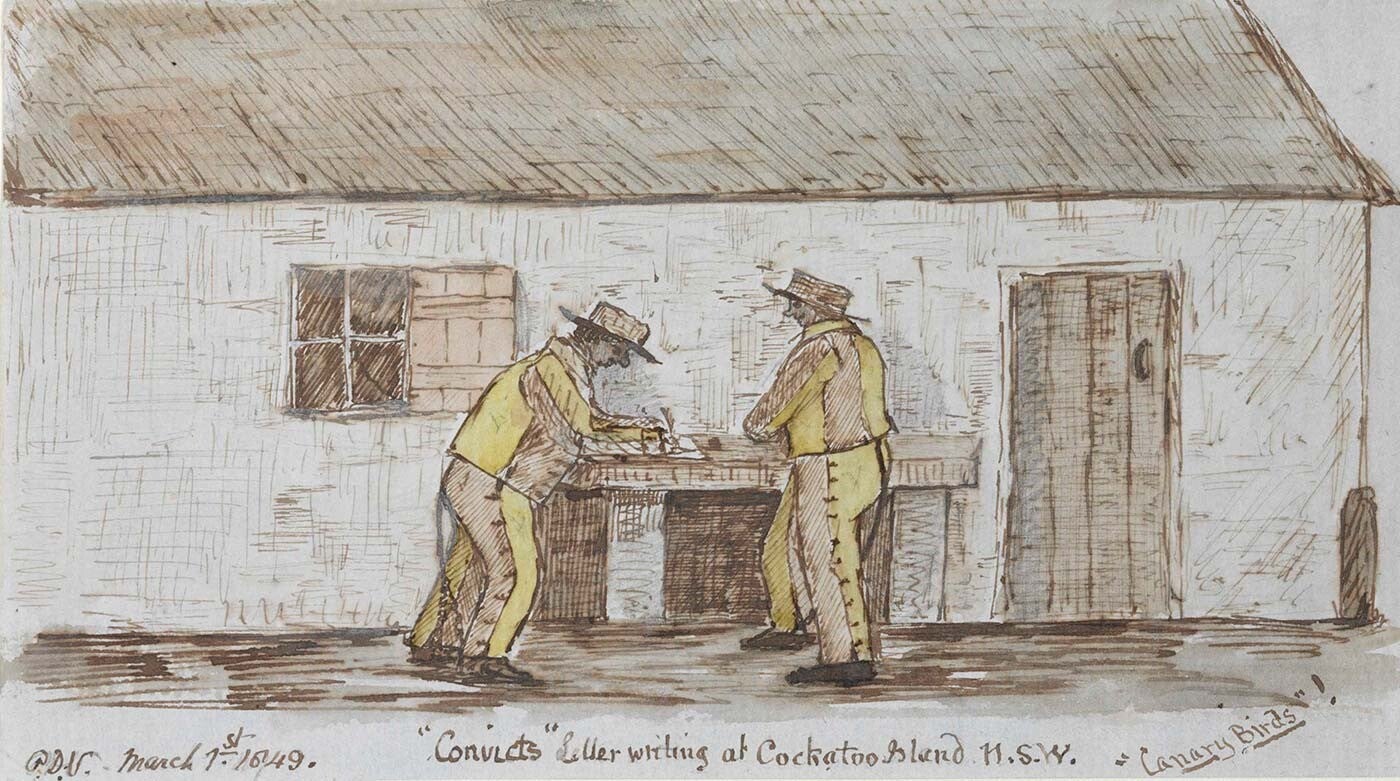
Convict establishment
1839 to 1869
The island became a prison, mostly for convicts who had re-offended in the colony. Convicts did hard labour, including building the first of the island’s two dry docks. The prison closed in 1869 and the remaining prisoners were moved to Darlinghurst.
In 2010 the island was listed on the UNESCO World Heritage List as part of the Australian Convict Sites, a group of eleven sites around Australia. Together they are some of the best surviving evidence of convict transportation and forced labour. On Cockatoo Island, the listing includes surviving prison-era buildings, Fitzroy Dock and the Engineering Workshop.
Image source: Cockatoo Island, lithograph by F. C. Terry (ca. 1860). National Library of Australia.
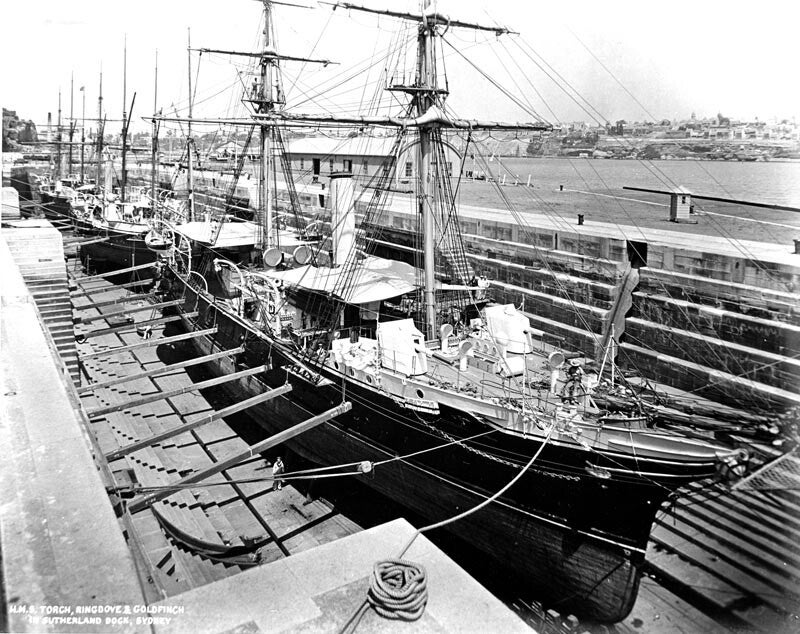
Dockyard and shipyard
1857 to 1992
Ships were built and repaired here for 135 years. In 1913 it became the official dockyard of the Royal Australian Navy. During the Second World War it was the main ship repair facility in the South-West Pacific. The shipyard closed in 1992.
Many buildings, cranes and workshops from this time remain. They show how the island was organised for heavy industry.
Image source: HMS Ships Torch, Ringdove and Goldfinch in the Sutherland Dock in 1897. Source: Naval Historical Society of Australia (2026).
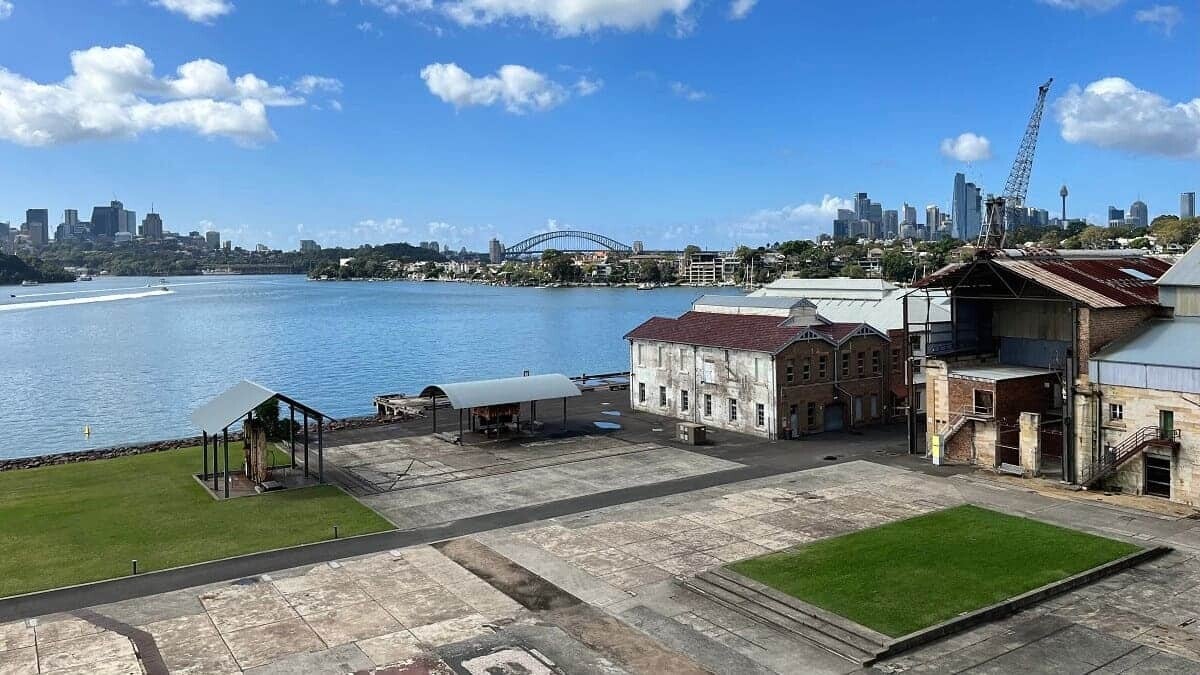
A heritage place today
2000s to now
After the shipyard closed, the Australian Government created the Sydney Harbour Federation Trust to look after former defence sites around the harbour, including Cockatoo Island. The island opened to the public in the 2000s. Today visitors can take tours, camp, stay in heritage accommodation and attend festivals, including the Biennale of Sydney, which has been held on the island since 2008.
Public use is part of how the heritage is protected, because it keeps the buildings in use and cared for.
Image source: Mens, A. J. (2026)
Timeline
- At least 60,000 years ago to 1839: Wareamah, a First Nations meeting place
- 1839: the convict prison begins
- 1857: shipbuilding and repair begins
- 1869: the prison closes
- 1913: Royal Australian Navy dockyard
- 1992: the shipyard closes
- 2010: World Heritage listing
Convicts built a dry dock. That dock helped the island become a shipyard. When the shipyard closed, the buildings and docks were still there, so the island could become a heritage place. Ask students to draw this chain and add one arrow label that explains each link.
Create Your Own Website With Webador